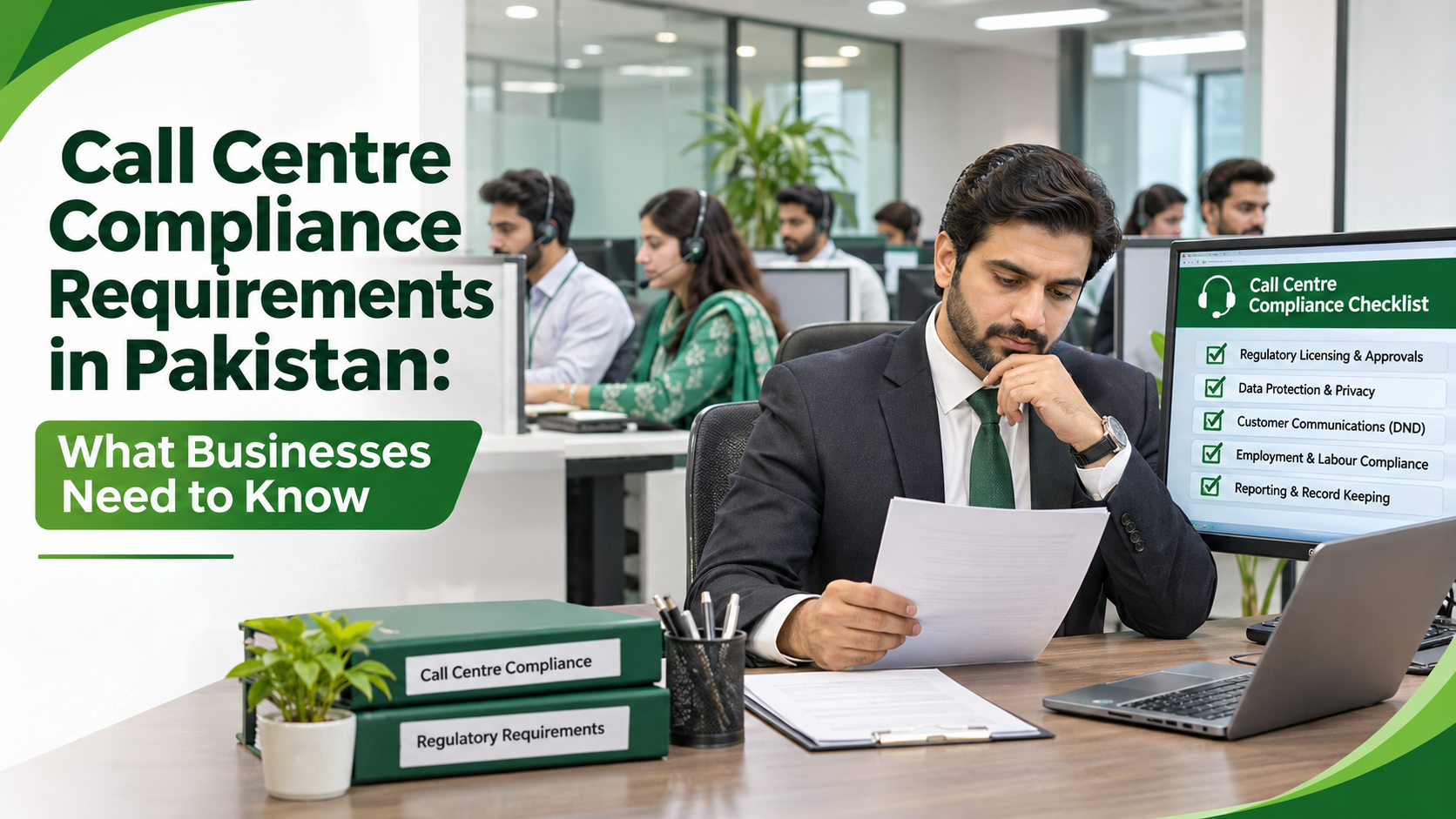
Call Centre Compliance Requirements in Pakistan: What Businesses Need to Know

Introduction
Operating a call centre in Pakistan involves much more than hiring agents, managing customer calls, and meeting service-level targets. Business owners must also maintain accurate payroll, deduct and deposit applicable taxes, submit statutory statements, and keep registrations up to date. Missing even one obligation can create financial pressure, interrupt operations, or expose the company to notices from regulatory authorities. Understanding wht filing deadlines is therefore an important part of building a reliable compliance system.
A call centre may work with local customers, international clients, or both. Its workforce may include permanent employees, shift-based agents, supervisors, contractors, and support staff. Each arrangement can create different tax and employment responsibilities. A well-planned call centre compliance framework helps management identify these responsibilities early instead of responding only after a notice or penalty arrives.
Why Compliance Matters for Call Centres in Pakistan
Call centres often grow quickly. A small team can become a large operation within a few months, while payroll and administration processes remain informal. As headcount, vendor payments, and client contracts increase, the number of compliance obligations also grows. Inaccurate salary calculations, missing employee records, or late tax deposits can become difficult to correct when several months of transactions have accumulated.
Compliance protects more than a company's legal position. It supports stronger financial control, improves employee confidence, and helps international clients assess whether a service provider is professionally managed. Proper business compliance in Pakistan also makes it easier to respond to bank requests, audits, due diligence checks, and regulatory questions.
1. Understand Your FBR and Withholding Tax Responsibilities
Withholding tax is an advance tax deducted or collected at the point of specified transactions. A call centre may have to consider tax on employee salaries, payments to suppliers, professional services, rent, contractors, and other transactions covered by the Income Tax Ordinance, 2001. The applicable section and rate depend on the nature of the payment, the recipient's status, and the rules in force for the relevant tax year.
The business making a payment may be a withholding tax agent. It must identify transactions that fall within the withholding regime, apply the correct rate, deduct tax at the required time, deposit the amount with the government, and maintain evidence. Simply recording a deduction in the accounting system does not complete the process. The tax must also be deposited and reported as required.
For call centres, common areas to review include:
-
Salary tax withholding in Pakistan under the rules applicable to employment income.
-
Vendor withholding tax on qualifying payments for goods, services, and contracts.
-
Contractor tax deductions where the relevant provisions apply.
-
Rent withholding tax for office premises, where required.
-
FBR IRIS compliance for payment records, statements, certificates, and returns.
Businesses should not assume that every payment is subject to the same rate. The accounts team should identify the correct legal provision and check the current FBR rate card for the relevant tax year. ATL status, exemptions, reduced-rate certificates, and the nature of the recipient may affect the treatment.
2. Know the WHT Filing Deadlines and Separate Them From Tax Deposit Dates
One of the most common compliance mistakes is treating tax deduction, tax deposit, and statement filing as one task. They are separate responsibilities, and each has its own timeline. A business can deposit tax but still have a reporting gap if the required statement is not filed. It can also submit a statement but remain exposed if the amount deducted was not deposited correctly.
Under Section 165 of the Income Tax Ordinance, prescribed withholding agents are required to furnish statements for the relevant periods. The statutory quarterly schedule sets the following dates, subject to the applicable category and any lawful extension:
| Quarter ending | Statement due date |
|---|---|
| 31 March | 20 April |
| 30 June | 20 July |
| 30 September | 20 October |
| 31 December | 20 January |
These dates are useful for a compliance calendar, but businesses must confirm which statement applies to their transactions. The rules include specific treatment for certain categories, including payment intermediaries and courier services.
Employers also have a separate annual salary withholding statement requirement for tax deducted under Section 149, which is due by 31 July after the end of the financial year under the prescribed rules. Other prescribed annual reporting and reconciliation requirements may also apply. For example, prescribed persons may have to submit an additional annual withholding statement within 30 days after the end of the tax year and reconcile the figures with their income tax return by the relevant return deadline.
The deposit date is not the same as the statement date. Under the applicable payment rules, tax deducted or collected by a person other than the Federal or Provincial Government is generally required to be deposited within seven days from the end of each week ending on Sunday. A call centre should therefore maintain a weekly payment routine rather than waiting for the quarterly statement deadline.
The focus keyword wht filing deadlines should be part of a practical compliance calendar, not just a reminder written in a diary. Assign a responsible person, record the reporting period, note the payment deadline, and save the CPR and submission acknowledgement after every filing.
Some older online guides and professional posts still refer to monthly withholding statement deadlines by the 15th of the following month. Businesses should not automatically rely on these older timelines. Filing requirements have changed over time, and the applicable schedule should be checked against the current law and the company's withholding category.
3. Maintain Accurate Payroll and Employee Tax Records
Payroll compliance is particularly important in call centres because remuneration may include basic salaries, night-shift allowances, attendance incentives, performance bonuses, overtime, commissions, and deductions. These elements should be recorded consistently so that salary tax is calculated using complete and reliable information.
A structured call centre payroll system should maintain employee contracts, CNIC and tax details, joining and leaving dates, monthly attendance, salary revisions, incentives, payslips, and tax deductions. When an employee leaves, the final settlement should also be documented. This gives the business a clear record of how each payroll figure was calculated.
Under Section 149, employers are responsible for deducting income tax from salaries where applicable. Salary deductions should reflect the employee's estimated annual taxable salary and the rates relevant to the tax year. A business should not use an old payroll template without checking whether the tax slabs or rules have changed.
Good payroll tax compliance also makes it easier to issue salary certificates and respond to employees who need evidence of tax deducted. Reconcile payroll summaries with bank transfers, the general ledger, tax payment receipts, and the annual salary statement before submission.
4. Complete EOBI Registration and Contribution Management
The Employees' Old-Age Benefits Institution provides social security benefits to eligible employees under the applicable framework. Call centre owners should assess whether their establishment and employees fall within the coverage requirements and complete the relevant employer and employee registration steps.
EOBI employer registration should not be postponed until the workforce becomes difficult to manage. Maintain accurate employee particulars, appointment dates, wage records, contribution calculations, and payment evidence. Monthly contribution responsibilities should be included in the payroll calendar and checked whenever staff join, leave, or change roles.
An incomplete EOBI record can lead to disputes about employee coverage, contribution arrears, or the employer's compliance position. Clear records and timely payments make it easier to demonstrate that the business has taken its obligations seriously.
5. Keep SECP Company Filings and Corporate Records Updated
A call centre operating through a private limited company must meet its applicable corporate obligations with the Securities and Exchange Commission of Pakistan. These may include annual filings, maintenance of statutory registers, reporting changes in directors or shareholding, and keeping company information current.
SECP annual compliance should be tracked separately from FBR tax reporting. The dates and forms are not interchangeable. A business should keep copies of its incorporation documents, board resolutions, ownership records, financial statements, and relevant filing acknowledgements in an organised corporate file.
Changes in directors, registered office details, shareholding, or other company particulars should be reviewed promptly to determine whether a filing is required. A company that ignores these updates may face avoidable regulatory complications when opening bank facilities, signing contracts, or completing client due diligence.
6. Review PSEB Registration and Export-Related Requirements
Call centres and business process outsourcing providers serving overseas clients may need to assess registration with the Pakistan Software Export Board, depending on the nature of their services and the applicable eligibility criteria. PSEB registration can support recognition as an IT-enabled or export-oriented service provider and may help businesses deal more confidently with banks and international clients.
A business should keep its PSEB registration documents accurate and monitor renewal or update requirements. Registration details should match the entity's legal name, tax profile, bank records, and actual service activities. If the business changes its address, ownership, service scope, or contact details, it should assess whether its PSEB profile also needs updating.
7. Build a Practical Compliance Calendar and Recordkeeping System
A compliance calendar turns complex requirements into manageable tasks. Rather than relying on one employee's memory, the business should assign an owner and backup for each filing, payment, registration, and review. A useful payroll compliance checklist can include:
-
Confirming employee data, salary changes, and payroll calculations before each pay cycle.
-
Reviewing vendor invoices and identifying payments that require withholding tax.
-
Depositing deducted tax within the applicable payment period and saving the CPR.
-
Preparing and reconciling the relevant withholding statements before their due dates.
-
Reviewing EOBI contributions and employee registration changes each month.
-
Tracking SECP filings, PSEB updates, and annual corporate requirements.
-
Keeping notices, challans, contracts, invoices, payslips, and acknowledgements in a secure archive.
Reconciliation is essential. Compare tax deducted in the ledger with the amount deposited, the CPR information, and the figures reported in IRIS. Investigate differences before filing. Correct employee or vendor identification numbers, missing invoices, duplicated entries, and incorrect tax sections while the supporting documents are easy to retrieve.
Recent discussions among Pakistani tax professionals online also highlight recurring issues such as incorrect withholding sections, outdated ATL and non-ATL rates, missing NTN or CNIC information, and failure to reconcile CPRs with accounting records. These practical concerns show why reviewing compliance throughout the year is more effective than checking everything just before a deadline.
8. What Can Happen When a Call Centre Misses Its Obligations?
Late or incorrect compliance can result in penalties, default surcharge, recovery proceedings, notices, and time-consuming explanations. Under the Income Tax Ordinance, a withholding agent may face liability where tax that should have been deducted or collected is not handled as required. A weak paper trail can make it harder to establish what happened and when.
The operational impact can be just as serious. Management may need to divert time from client delivery to resolve old records, answer notices, or reconstruct payroll. Employees may lose confidence if their tax certificates or benefit registrations are delayed. International customers may also question the provider's internal controls during a compliance review.
A tax compliance audit can help identify outstanding filings, incorrect deductions, missing payment evidence, and gaps in employee or corporate records. The review should cover both current obligations and historical periods that may require correction.
9. When Professional Compliance Support Makes Sense
As a call centre expands, it may become difficult for one administrator to manage payroll, tax deductions, corporate filings, and employee contributions alongside daily operations. Professional support can help establish processes, review past compliance, prepare required statements, and monitor future deadlines.
A useful call centre compliance service should begin with a review of the company's legal structure, FBR registration, payroll records, vendor payments, EOBI position, SECP status, and PSEB requirements where applicable. The service provider should explain which obligations apply, what records are missing, who will handle each task, and how management will receive filing evidence.
Businesses should look for clear responsibilities, secure handling of employee and financial data, transparent reporting, and practical advice when rules change. Outsourcing does not remove the company's legal responsibilities, but it can improve oversight and reduce the chance that an important task is forgotten.
Conclusion
Call centre compliance in Pakistan is an ongoing management responsibility, not a one-time registration exercise. Businesses need to coordinate payroll, withholding tax, FBR reporting, EOBI contributions, SECP filings, and PSEB requirements according to their legal structure and actual operations. A dependable calendar, accurate records, and regular reconciliation make these responsibilities easier to manage.
Paying attention to wht filing deadlines is especially important because tax deduction, deposit, statement submission, and annual reconciliation may follow different timelines. Management should confirm the requirements that apply to its business instead of relying on outdated online reminders. With a clear process and informed support from Pakistan’s First Online Consultants (PFOC), call centres can reduce compliance risks and focus more confidently on service quality and sustainable growth.