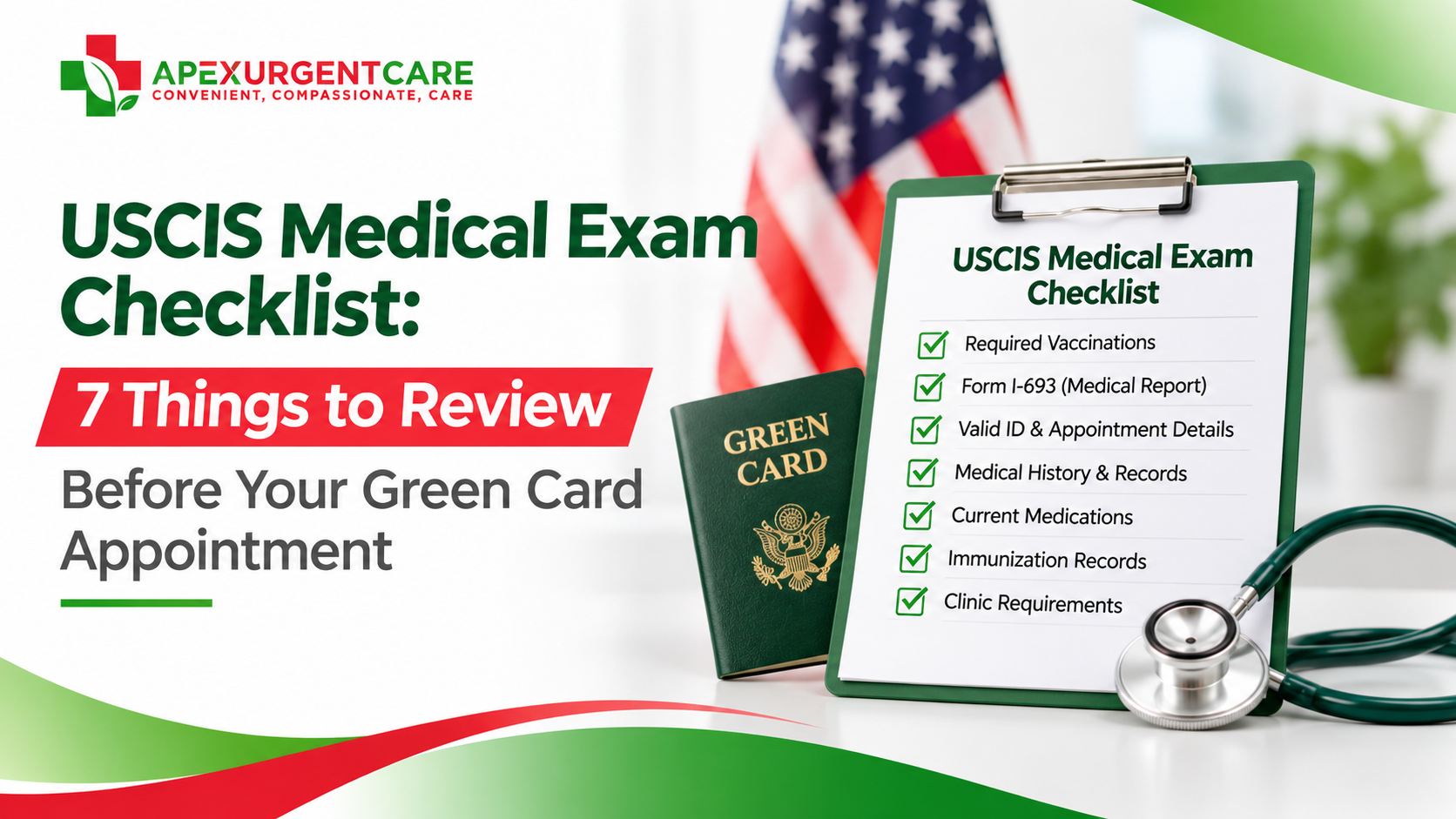
USCIS Medical Exam Checklist: 7 Things to Review Before Your Green Card Appointment

Preparing for a green card application involves more than completing forms and gathering identity documents. Applicants must also complete an immigration medical examination to demonstrate that they meet the health-related requirements for permanent residency in the United States. Knowing what to bring, which vaccinations may be required, and how the examination works can make the process easier.
A USCIS medical exam is an important part of the adjustment of status process for many applicants. The examination must be completed by a USCIS-designated civil surgeon in the United States. Reviewing the requirements before your appointment can help prevent unnecessary delays and additional visits.
Whether you are applying for permanent residency through a family-based petition, employment, or another eligible category, the following checklist covers seven important things to review before your green card medical appointment.
1. Confirm That Your Doctor Is a USCIS-Designated Civil Surgeon
One of the first things to check is whether your healthcare provider is authorized to perform immigration medical examinations.
USCIS requires applicants completing the examination in the United States to visit a designated civil surgeon. A regular primary care physician cannot automatically perform and certify the immigration examination unless they have the appropriate designation.
Before scheduling your appointment:
-
Verify the doctor's civil surgeon designation.
-
Confirm that the clinic performs immigration medical examinations.
-
Ask about appointment availability and examination fees.
-
Check whether laboratory testing and vaccinations are available at the clinic.
Choosing an authorized immigration doctor is essential because the medical examination must follow specific USCIS requirements.
2. Gather Your Identification and Immigration Documents
Arriving with the correct paperwork helps the civil surgeon complete your examination and medical documentation accurately.
Prepare the following documents before your appointment:
-
Valid government-issued photo identification.
-
Passport, if available.
-
USCIS appointment or immigration-related correspondence.
-
Form I-693, if instructed to bring it.
-
Previous vaccination records.
-
Medical records relevant to your examination.
Applicants should also review the latest Form I-693 instructions before attending their appointment. Requirements can change, so relying on an outdated checklist may lead to missing information.
3. Review Your Vaccination History
Vaccination records are an important part of the immigration medical exam. The civil surgeon reviews your immunization history to determine whether you meet the applicable vaccination requirements.
Depending on your age, medical history, and vaccination records, required vaccines may include:
-
Measles, mumps, and rubella (MMR).
-
Tetanus, diphtheria, and pertussis (Tdap).
-
Polio.
-
Hepatitis B.
-
Varicella.
-
Influenza, when applicable.
-
Other vaccines required for your age group under current CDC guidance.
If you have received vaccinations outside the United States, bring available documentation. Records do not necessarily need to come from a U.S. healthcare provider, but they must be suitable for review by the civil surgeon.
If records are missing, the doctor can explain the appropriate next steps.
4. Understand the Medical Tests and Health Evaluation
A USCIS medical exam includes more than a routine physical assessment. The civil surgeon reviews your medical history and evaluates specific health conditions identified in immigration medical examination guidelines.
The examination may include:
Medical history review: The doctor asks about previous illnesses, hospitalizations, medications, and relevant medical conditions.
Physical examination: The provider evaluates your general health and checks for conditions relevant to immigration requirements.
Tuberculosis screening: Applicants are screened for tuberculosis according to current CDC technical instructions. Depending on age and circumstances, this may involve an approved blood test and additional evaluation when indicated.
Additional laboratory testing: Testing for certain communicable diseases, including syphilis and gonorrhea, is conducted according to applicable age-based and CDC requirements.
Not every applicant requires the same tests or follow-up procedures. Your age, medical history, and initial screening results determine what additional evaluation may be necessary.
5. Discuss Existing Medical Conditions and Medications
Your medical history is another important part of the examination. Certain health conditions, medications, or previous treatments may affect how the civil surgeon evaluates your medical information.
Be prepared to discuss:
-
Chronic conditions such as diabetes or hypertension.
-
Previous surgeries or hospitalizations.
-
Current prescription medications.
-
Relevant mental health history.
-
Any history of communicable diseases.
-
Previous treatment for tuberculosis or other infections.
Answer the doctor's questions honestly and provide supporting medical records when available. Having a medical condition does not automatically mean an applicant will be denied a green card. USCIS evaluates health-related eligibility under specific immigration rules.
6. Understand the Form I-693 Process
Form I-693, officially called the Report of Immigration Medical Examination and Vaccination Record, documents the findings of your immigration medical examination.
The civil surgeon completes the required sections after reviewing your medical history, physical examination, laboratory results, and vaccination records.
Keep these points in mind:
-
Complete your personal information as instructed.
-
Do not sign the form before the civil surgeon asks you to do so.
-
Attend any required follow-up appointments.
-
Review your personal copy for basic information accuracy.
-
Receive the completed form in a sealed envelope.
Important: Do not open the sealed envelope intended for USCIS. An opened or altered envelope may cause USCIS to reject the medical examination report. The civil surgeon should provide a separate copy for your personal records.
Applicants filing Form I-485 should follow the current USCIS filing instructions regarding when and how to submit Form I-693.
USCIS+1
7. Plan for Appointment Costs and Additional Testing
The cost of an immigration medical exam can vary between clinics. The total expense may depend on the examination fee, required laboratory tests, vaccinations, and any additional medical evaluations.
Before booking, ask the clinic:
-
What is included in the examination fee?
-
Are laboratory tests billed separately?
-
Are vaccinations included or charged individually?
-
What happens if additional testing is required?
-
When will the completed Form I-693 be available?
Applicants are generally responsible for the examination costs, including required follow-up tests and treatment. Checking the complete fee structure beforehand can help you plan your budget.
It is also useful to schedule your appointment with enough time to complete any additional testing before your immigration filing deadline.
Why Preparation Matters for Your Green Card Medical Appointment
A little preparation can make the immigration medical examination more straightforward. Missing vaccination records, incomplete medical information, or selecting a provider who is not authorized to perform the examination can create avoidable delays.
Applicants should also remember that the civil surgeon's role is to complete the medical assessment and documentation. The doctor does not decide whether someone qualifies for permanent residency. That decision belongs to USCIS.
For applicants in Texas, including those in the Houston area, confirming the clinic's civil surgeon designation and available examination services before scheduling is a practical first step.
Frequently Asked Questions About the USCIS Medical Exam
1. Who can perform a USCIS medical exam?
Only a physician designated by USCIS as a civil surgeon can complete the immigration medical examination in the United States, subject to limited exceptions. Applicants should verify the provider's designation before scheduling.
2. What should I bring to my immigration medical exam?
Bring a valid photo ID, passport if available, vaccination records, relevant medical history, prescription medication details, and any USCIS documents or forms requested by the clinic.
3. What happens if I am missing vaccination records?
The civil surgeon will review your available records and determine which vaccinations or acceptable evidence of immunity are needed. Depending on your circumstances, additional vaccinations or laboratory testing may be recommended.
4. Can I open my Form I-693 envelope before submitting it?
No. The completed immigration medical examination form must be submitted to USCIS in its sealed envelope. Opening or altering the envelope can result in rejection of the report.
5. Does having a medical condition automatically affect green card approval?
No. Having a medical condition does not automatically make someone ineligible for permanent residency. USCIS evaluates specific health-related grounds of inadmissibility under immigration law.
6. How long does the immigration medical exam take?
The appointment length varies depending on medical history, physical evaluation, vaccination review, and required laboratory tests. Additional visits may be necessary if further testing or vaccinations are needed.
Final Thoughts
Preparing for a green card medical appointment involves more than simply visiting a healthcare provider. Reviewing your vaccination history, gathering medical documents, understanding laboratory requirements, and confirming the civil surgeon's authorization can help make the process more organized.
For individuals seeking an immigration medical exam in the Houston area, Apex Urgent Care Clinic provides immigration physical examination services. Reviewing appointment requirements and understanding the Form I-693 process beforehand can help applicants take the next step with greater confidence.