


NetSuite ERP Partner in Dubai: Why Businesses Are Switching
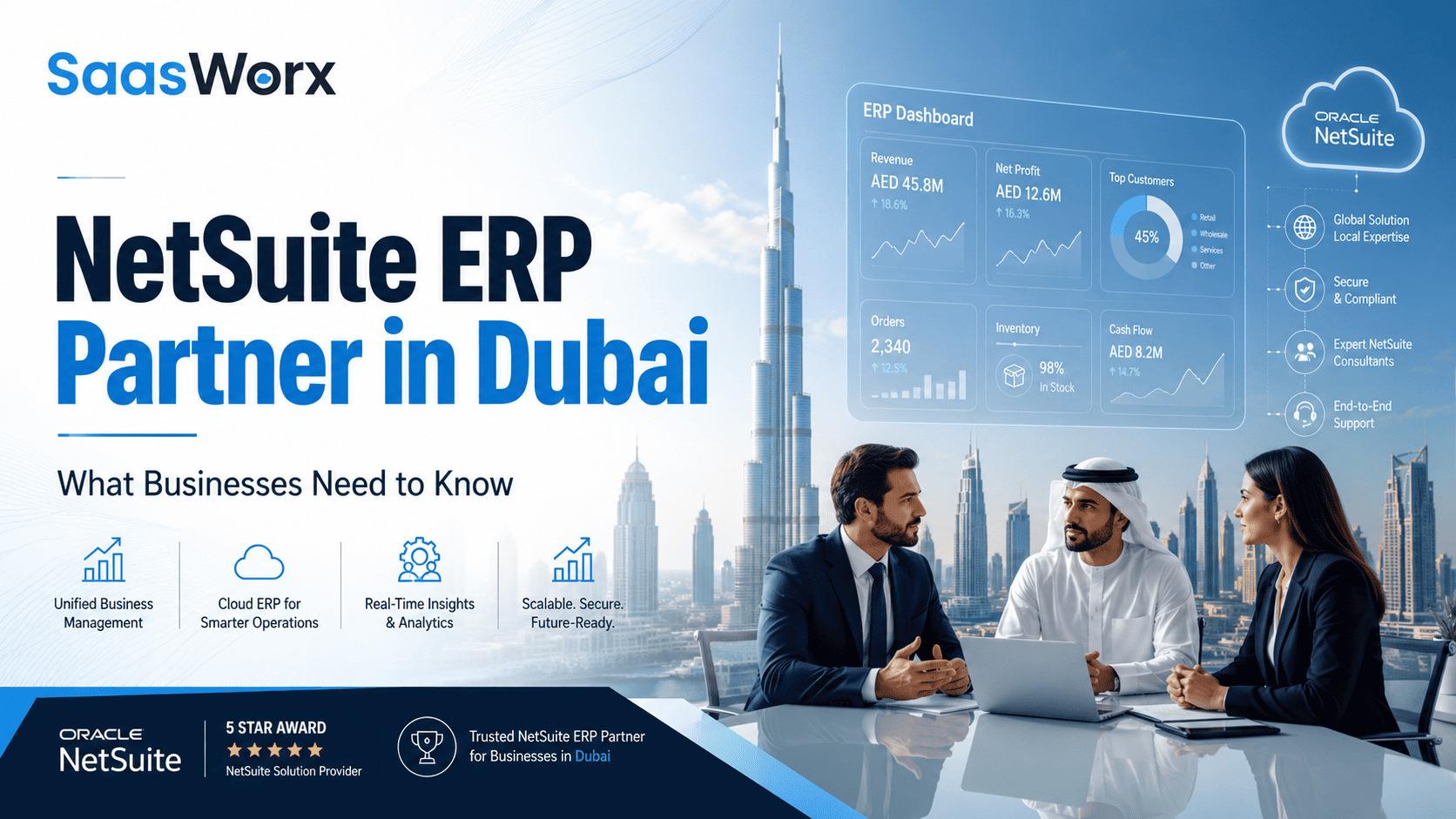
Dubai businesses running outdated ERP systems are paying a high price. They face manual reconciliation, disconnected data, and compliance gaps that slow growth. A NetSuite ERP partner in Dubai can move companies off legacy platforms and onto a system built for how businesses actually operate today.
According to Gartner, 60% of ERP implementations running on-premise software are more than ten years old, leaving companies exposed to security vulnerabilities and rising maintenance costs. In a market as competitive as Dubai, that backlog creates real risk.
This post explains the core reasons businesses in the UAE are making the switch, what to expect during migration, and the questions you should ask before choosing an implementation partner.
Why Are Companies in the UAE Moving to Cloud ERP?
Companies in the UAE are moving to cloud ERP because on-premise systems cannot keep up with the pace of regulatory change, multi-entity complexity, and real-time reporting demands. Cloud ERP gives finance and operations teams a single source of truth accessible from anywhere, without the overhead of managing servers.
The UAE introduced VAT in 2018 and has since tightened Federal Tax Authority reporting requirements. Legacy systems often require expensive custom patches to stay compliant. Cloud ERP platforms update automatically, pushing compliance changes to all users without downtime or additional cost.
Dubai also has a high concentration of businesses with operations across multiple countries. Legacy ERP systems struggle to manage multi-currency transactions, intercompany eliminations, and consolidated reporting across subsidiaries. Cloud platforms handle this natively.
The Cost of Staying on Legacy Software
The visible cost of legacy ERP is the annual licence fee. The real cost is everything else. IT teams spend significant time on patches, upgrades, and integrations that should be automated. Finance teams export data to spreadsheets because the system cannot produce the reports they need. Errors compound.
Forrester estimates that the total cost of ownership for on-premise ERP is 2.5 to 3 times higher than cloud ERP over a five-year period when you include infrastructure, IT labour, and lost productivity.
Real-Time Visibility as a Business Driver
The most cited reason for migration is visibility. Legacy systems produce reports based on batch processing meaning the data is always hours or days old. Cloud ERP processes transactions in real time, giving leadership accurate dashboards without waiting for month-end close.
For trading companies, distributors, and professional services firms operating in Dubai, this matters more now than it did five years ago. Margins are tighter, credit cycles are shorter, and decisions need to happen faster.
What Is the Difference Between Legacy ERP and Cloud ERP?
Legacy ERP runs on servers you own and maintain, requires manual upgrades, and is typically licensed per user on a perpetual basis. Cloud ERP runs on the vendor's infrastructure, updates automatically, and is priced as a subscription. The functional difference is significant: cloud ERP is built for flexibility, while legacy systems were designed for stability in a slower business environment.
The architectural difference creates downstream effects on every part of the business. Integration with third-party tools CRM, e-commerce, payroll is far simpler on a cloud platform because modern APIs are built in. Legacy systems require middleware and custom development for every integration, which adds cost and fragility.
Modules That Matter for Dubai Businesses
Most Dubai businesses migrating to cloud ERP prioritise the following modules: financial management, order-to-cash, procure-to-pay, and inventory management. Professional services firms typically add project accounting and resource management. For businesses with warehouses or logistics operations, advanced inventory and demand planning are critical.
The ability to add modules as the business grows without a full reimplementation is one of the strongest arguments for cloud ERP. Legacy platforms often require a new version purchase or a significant consulting engagement to unlock additional functionality.
UAE VAT Compliance and Audit Readiness
UAE businesses must produce VAT returns, maintain audit trails, and support FTA inquiries with accurate transaction records. Modern cloud ERP platforms include built-in VAT configuration for the UAE, automated tax calculations, and audit-ready reports. Legacy systems, particularly those originally built for other markets, often require manual workarounds to meet FTA standards.
How Long Does a NetSuite Implementation Take in Dubai?
A standard NetSuite implementation for a small to mid-size business in Dubai takes between three and six months. Complex implementations those involving multi-subsidiary structures, custom workflows, or integrations with legacy systems can take six to twelve months. The timeline depends heavily on how prepared the business is with clean data and clear process requirements.
Most delays in ERP implementations come from the client side, not the vendor. Data migration is the most time-consuming phase. Businesses that invest in data cleansing before the project starts consistently finish faster and with fewer post-go-live issues.
Phases of a Typical ERP Migration
A well-run implementation follows a structured sequence: discovery and requirements, system configuration, data migration, integration development, user acceptance testing, and go-live with hypercare support. Skipping or compressing any phase increases post-go-live risk.
Discovery is often underestimated. A thorough discovery phase maps current processes, identifies gaps, and produces a configuration blueprint before any technical work begins. Businesses that try to skip straight to configuration frequently revisit decisions mid-project, which extends the timeline and increases cost.
What to Look for in an Implementation Partner
Choosing the right partner is as important as choosing the right platform. Look for a partner with certified consultants, a documented implementation methodology, and verifiable references from similar businesses in the UAE. NetSuite ERP implementation teams based in Dubai typically offer local knowledge of FTA compliance requirements alongside the technical depth needed for complex configurations which matters significantly during data migration and go-live.
Ask any prospective partner how they handle scope changes mid-project, what their escalation process looks like, and how they structure post-go-live support. The answers reveal how the engagement will actually run.
Is NetSuite Suitable for SMEs in Dubai?
NetSuite is suitable for SMEs in Dubai, particularly those that have outgrown accounting software like Tally or QuickBooks and need a platform that can scale with them. The subscription model means smaller businesses are not paying large upfront licence fees, and they can start with core financials before adding modules as the business grows.
The UAE has a significant base of SMEs in trading, technology, professional services, and logistics. These businesses often have multi-currency requirements, project billing needs, or inventory complexity that basic accounting software cannot handle. Cloud ERP fills that gap without requiring the infrastructure investment that once made ERP a large-enterprise product.
Common Triggers for SME Migration
The most common triggers for an SME to start evaluating ERP are: a planned audit, a new investor or board request for cleaner financial reporting, a period of fast revenue growth that exposes process gaps, or a failed VAT filing that highlights system limitations. Regulatory pressure and growth pressure together create the strongest case for change.
Conclusion
Dubai businesses moving from legacy ERP to cloud platforms are responding to real commercial pressure: regulatory complexity, multi-entity operations, and the need for accurate, real-time financial data. A NetSuite ERP partner in Dubai with genuine UAE market experience reduces implementation risk and shortens the path to value.
The technology decision is the easy part. The harder question is whether the business is ready with clean data, aligned stakeholders, and a clear picture of what good looks like on the other side of migration. As AI-driven financial analysis becomes standard practice, the quality of the underlying ERP data will determine how much value those tools can actually deliver.


 English
 Arabic
 Spanish
 Portuguese
 Deutsch
 Turkish
 Dutch
Dutch
 Italiano
 Russian
 Romaian
 Portuguese (Brazil)
 Greek
Greek