


How Dual SIM Routers Prevent the Hidden Costs of Remote Support Dispatches
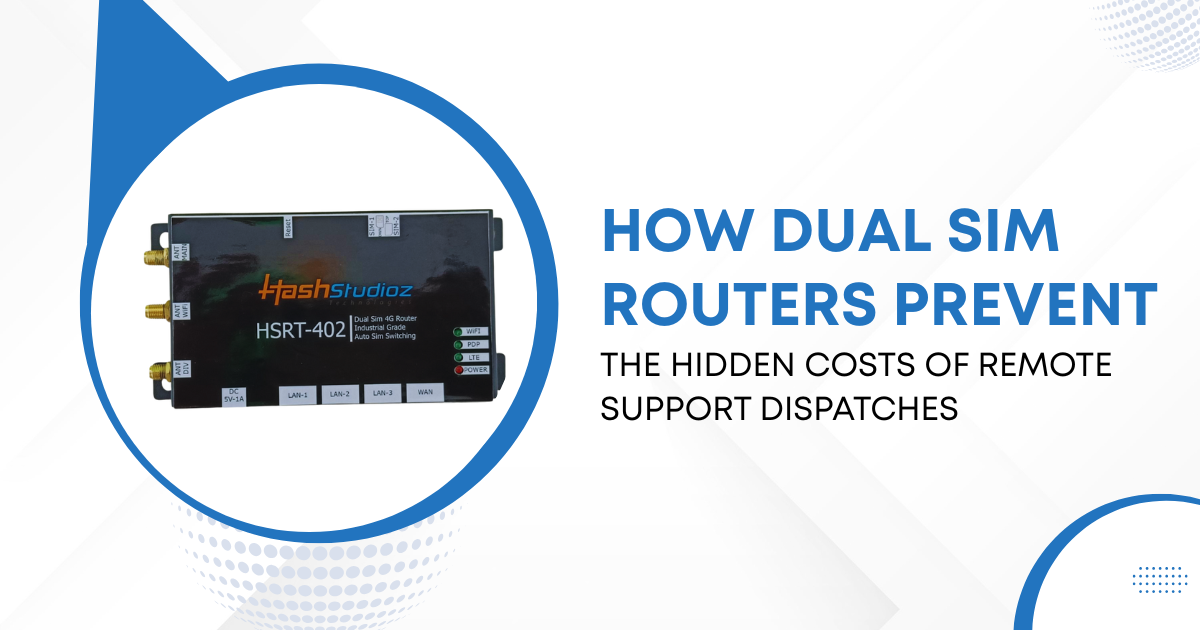
Modern industrial facilities such as oil rigs, water treatment plants, weather stations, and wind farms depend on uninterrupted network connectivity for monitoring and automation. Because these sites are often located in remote areas, resolving communication failures can be costly and time-consuming. Network outages disrupt data transmission, reduce operational visibility, and may result in significant financial losses. To ensure continuous connectivity, organizations deploy redundant communication solutions such as a Dual Sim Industrial Router and an Industrial Cellular Router. These devices provide automatic network failover, maintain reliable remote access, and minimize downtime, helping businesses improve operational efficiency while reducing maintenance costs and emergency service visits.
The True Expense of a Truck Roll
In the field service industry, dispatching a technician to a physical site is known as a truck roll. Many organizations fail to calculate the true, hidden costs associated with these dispatches. They look only at basic fuel expenses and standard hourly wages.
1. Direct Maintenance Costs
A typical industrial service dispatch involves significant expenditure. According to field service benchmark studies, the average cost of a single enterprise truck roll ranges from $300 to $1,000. This cost escalates rapidly if the remote site sits hours away from the nearest service hub.
The total cost includes several distinct factors:
-
Technician Labor: Specialized network engineers command high hourly wages during travel and repair times.
-
Vehicle Upkeep: Fuel, insurance, and wear on service vehicles drain corporate budgets over time.
-
Opportunity Cost: While traveling to a remote site, the technician cannot complete proactive maintenance elsewhere.
-
Expedited Shipping: If the site requires a replacement part, companies pay premium rates for fast delivery.
2. Indirect Downtime Losses
The financial damage of a network outage often dwarfs the direct cost of the technician. Industry statistics show that unexpected downtime costs industrial manufacturers an average of $22,000 per minute.
For an oil production site or an electrical substation, a four-hour network outage can cause a total loss exceeding $80,000. If the system cannot report safety metrics, regulators may issue heavy compliance fines to the operator.
Why Single Cellular Networks Fail
Many companies try to connect remote sites using a standard, single-carrier cellular router. While cellular networks provide excellent coverage, a single carrier cannot guarantee 100% network uptime.
1. Carrier Infrastructure Outages
Cellular towers experience maintenance windows, hardware failures, and fiber-optic backhaul cuts. If a local tower goes offline for service, a single-SIM router loses its connection completely. The device cannot communicate until the carrier repairs the local tower infrastructure.
2. Environmental Signal Degradation
Outdoor environments change constantly. Heavy rainstorms, dense fog, and snow accumulation attenuate cellular signals.
Furthermore, industrial environments feature large metal structures and heavy machinery. These objects reflect and block radio waves, creating sudden dead zones. A single carrier signal that works perfectly in the summer may drop below the required threshold during winter storms.
3. Network Congestion
Cellular networks prioritize consumer voice traffic over machine-to-machine data during emergencies. If a traffic accident or a storm occurs near a remote highway, public cellular networks experience a massive surge in usage. This congestion squeezes out industrial data streams, dropping the remote site offline.
Mechanics of Dual SIM Backup Architecture
A Dual Sim Industrial Router solves the single-carrier vulnerability by introducing cellular redundancy. The device holds two distinct SIM cards from two independent cellular network providers.
1. Active-Passive Redundancy
In an active-passive configuration, the router uses SIM A as its primary data path. The device monitors the health of this connection continuously using ping tests and signal strength metrics.
If the primary carrier network fails, the router switches internal lines to SIM B. This backup card connects to an entirely different cellular infrastructure provider.
2. Intelligent Link Monitoring
Advanced routers do not just wait for a total signal loss to switch carriers. They track the quality of the connection using specific parameters:
-
RSSI (Received Signal Strength Indicator): Measures the raw power level of the cellular signal.
-
RSRP (Reference Signal Received Power): Tracks the strength of the specific carrier control signals.
-
Latency: Measures the round-trip time for data packets traveling to the central server.
-
Packet Loss: Tracks the percentage of data packets that fail to reach their destination.
If packet loss exceeds 5% or latency spikes above 500 milliseconds, the router recognizes an unstable link. It initiates a proactive switch to the secondary SIM card before the primary connection drops completely.
How Automated Failover Minimizes Dispatches
The primary value of a dual-SIM setup lies in automated execution. The hardware resolves network issues locally without requiring human intervention or physical access.
1. Elimination of Diagnostics Travel
When a single-SIM router drops offline, engineers must travel to the site just to discover why the link failed. They do not know if the router broke down, the antenna uncoupled, or the carrier network crashed.
With a dual-SIM setup, the router stays online via the backup carrier. The IT team logs into the device remotely to diagnose the primary link. They can update firmware, adjust antenna alignment, or contact the primary carrier to report a tower outage. This remote visibility saves an immediate trip to the field.
2. Seamless Recovery Timelines
An automated failover routine takes between 10 and 30 seconds to complete. The remote site experiences a brief pause in data transmission rather than a multi-day outage. Automated machinery continues to run safely, and central servers continue to log vital data points.
Real-World Case Study: Utility Substation Network
A large electrical utility provider in the Midwest managed 150 remote distribution substations. Each substation utilized a single-SIM cellular router to transmit power usage statistics and safety alerts to the central office.
1. The Problem Pattern
The substations sat in rural zones with volatile weather patterns. Every month, approximately eight substations experienced network drops due to carrier tower maintenance or storm damage. Because the sites went dark, the utility company had to dispatch an IT technician in a service truck to investigate each issue.
Over a single year, the company logged 96 emergency dispatches. Each truck roll cost the company an average of $450 in vehicle wear, fuel, and technician overtime. The annual budget for these remote support dispatches reached $43,200. More importantly, the substations remained blind to the central office for an average of five hours per incident during the travel window.
2. The Technical Upgrade
The utility company replaced the single-carrier hardware with an enterprise Industrial Router featuring dual-SIM slots. They placed an AT&T SIM card in slot one and a Verizon SIM card in slot two. They programmed the routers to monitor latency and automatically switch carriers if packet loss occurred.
3. The Financial Outcome
During the first year after the upgrade, primary carrier networks failed 112 times across the 150 sites. However, the dual-SIM routers handled 108 of these failures automatically by switching to the backup network within 15 seconds.
The central office never lost visibility into those substations. The IT team only had to dispatch a truck four times during the entire year, specifically for physical hardware damage caused by lightning strikes.
The company reduced its annual dispatch costs from $43,200 down to $1,800. The upgrade saved the utility company $41,400 in direct dispatch costs and eliminated thousands of hours of dangerous network blindness.
Technical Specifications for Industrial Environments
Companies must avoid using consumer-grade mobile hotspots or cheap commercial routers for industrial applications. Remote infrastructure requires a ruggedized Industrial Router designed to withstand harsh field conditions.
1. Robust Environmental Housing
Industrial routers use heavy-duty aluminum or steel enclosures rated for IP30 or higher protection. These metal shells shield internal circuit boards from dust, moisture, and intense electromagnetic interference generated by nearby high-voltage machinery.
2. Wide Thermal Tolerances
Commercial routers fail when temperatures drop below freezing or rise inside unventilated metal control boxes. Industrial hardware uses premium electronic components that operate reliably from -40°C to 85°C.
3. Redundant Power Inputs
To prevent power failures from knocking out communications, industrial models feature dual terminal block power inputs. Technicians connect the router to two independent power supplies, such as a main solar battery bank and a backup generator loop.
|
Feature |
Consumer Hotspot |
Industrial Router |
|
Enclosure |
Plastic Case |
Heavy Steel / Aluminum |
|
Operating Temp |
0°C to 35°C |
-40°C to 85°C |
|
Power Supply |
Single 5V USB |
Redundant 9V-48V DC Terminal |
|
Mounting |
None |
Integrated DIN-Rail |
|
SIM Slots |
Single Slot |
Dual Slots with Active Failover |
Step-by-Step Configuration Guide
Deploying a dual-SIM cellular gateway requires precise software configuration to ensure effective network failover performance.
Step One: Physical SIM Installation
Insert the primary SIM card into slot one and the secondary SIM card into slot two. Ensure you use SIM cards from different cellular providers that use distinct tower networks. Attach high-gain external cellular antennas to the main and auxiliary SMA ports of the router.
Step Two: Local Management Login
Connect your laptop to the LAN port of the router using an Ethernet cable. Open an internet browser and input the default IP address of the hardware. Enter the secure administrator credentials to access the internal operating system.
Step Three: Cellular Interface Setup
Navigate to the network configuration menu and select the cellular interface settings. Enable both SIM slots. Enter the correct Access Point Name (APN) configurations provided by each cellular carrier to ensure the router can authenticate on both networks.
Step Four: Failover Rule Creation
Open the link management or failover policy menu. Set SIM slot one as the primary interface and SIM slot two as the backup interface.
Configure an automated ICMP ping test rule. Instruct the router to send a ping to a reliable public DNS server, such as 8.8.8.8, every ten seconds through the active SIM card.
Step Five: Verification and Threshold Tuning
Set the failure condition parameters. Program the router to declare a link failure if three consecutive pings fail to return an answer.
Set the recovery period to 60 seconds. This setting ensures the primary network remains stable before the router switches back from the backup card. Save the settings and reboot the device to activate the protection loop.
Future Trends in Remote Connectivity
Industrial networking technology continues to evolve, offering even more security layers for remote field sites.
1. 5G Industrial Integration
New generations of industrial routers combine dual-SIM redundancy with ultra-fast 5G cellular modems. 5G networks provide lower latency and higher bandwidth, allowing remote sites to transmit high-definition video feeds alongside standard sensor data.
2. Satellite and Cellular Hybrid Systems
Advanced remote gateways now combine a cellular SIM card with a satellite internet terminal. If an entire regional cellular grid crashes during a major natural disaster, the router automatically moves its data path to a satellite network, guaranteeing connectivity in any situation.
Conclusion
Every remote field site presents an ongoing maintenance risk. A single network failure can quickly drain corporate profits through repair expenses and extended operational downtime.
Deploying a Dual Sim Industrial Router creates a reliable self-healing network infrastructure. The device identifies carrier drops instantly and switches to a backup path without requiring human intervention.
This automated response saves thousands of dollars in truck roll fees, lowers vehicle fuel costs, and keeps technical staff focused on high-value projects. Investing in redundant communication hardware reduces the total cost of ownership for remote assets and ensures long-term operational success.

 English
 Arabic
 French
 Spanish
 Portuguese
 Deutsch
 Turkish
 Dutch
Dutch
 Italiano
 Russian
 Romaian
 Greek
Greek