


Why Startups Need a Fractional General Counsel Before Legal Problems Grow
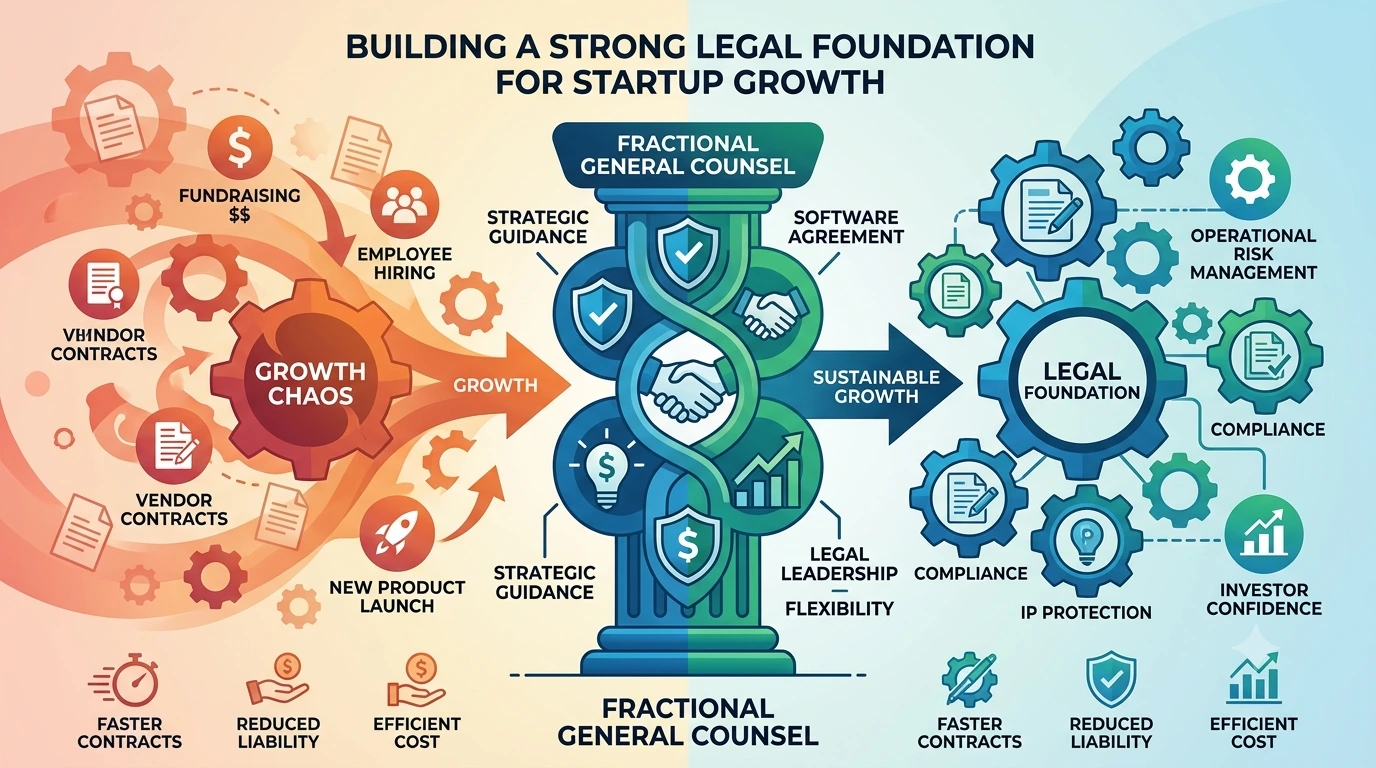
Building a startup is exciting. One week you are closing your first customers. The next week you are hiring employees, signing vendor contracts, raising investment, and launching new products. Growth creates opportunity, but it also creates legal risk.
Many founders believe they only need legal help when something goes wrong. In reality, the best legal decisions happen long before a dispute, lawsuit, or compliance issue appears. That is where a fractional general counsel provides real value.
Instead of hiring a full-time executive lawyer, growing companies can access experienced legal leadership on a flexible basis. This approach gives startups practical legal guidance while keeping costs under control.
In this guide, we will explain what a fractional general counsel does, why a fractional general counsel for startups has become increasingly common, how operational risk management supports business growth, why every company needs a strong software license agreement, and when it makes sense to bring in a startup general counsel.
What Is a Fractional General Counsel?
A fractional general counsel is an experienced legal executive who works with a company on a part-time, project-based, or ongoing advisory basis. Rather than joining the company as a full-time employee, they become part of the leadership team while working only as much as the business needs.
Think of it like hiring a CFO for one day a week instead of five. You receive strategic guidance without paying a full executive salary.
A fractional general counsel often helps with:
- Commercial contracts
- Customer and supplier agreements
- Employment matters
- Regulatory compliance
- Intellectual property protection
- Corporate governance
- Risk management
- Legal strategy during fundraising and expansion
This model has become especially attractive for startups and growing technology companies that need experienced legal advice but are not yet ready to build an internal legal department.
Why a Fractional General Counsel for Startups Makes Sense
Every startup wants to move quickly. Unfortunately, legal mistakes often move even faster.
Founders regularly juggle product development, fundraising, hiring, marketing, and customer acquisition. Legal work is usually pushed to the bottom of the list until a problem arises.
A fractional general counsel for startups changes that approach by helping founders prevent problems instead of reacting to them.
Some common situations include:
Reviewing Commercial Contracts
Startups sign agreements with customers, vendors, consultants, software providers, and strategic partners. Small wording differences can create major financial obligations later.
An experienced legal advisor reviews these agreements before they become expensive mistakes.
Supporting Investment Rounds
Investors perform legal due diligence before funding a company. Missing corporate records, poorly drafted agreements, or intellectual property ownership issues can delay or even stop investment.
Early legal preparation makes fundraising smoother.
Protecting Intellectual Property
For technology companies, intellectual property often represents the company's most valuable asset.
A legal advisor helps ensure ownership of software, trademarks, confidential information, and employee-created work remains with the business.
Building Internal Policies
As companies hire employees, they need compliant employment documents, workplace policies, confidentiality agreements, and onboarding procedures.
Creating these documents early reduces future legal exposure.
Operational Risk Management Is More Than Compliance
Many people hear operational risk management and immediately think about paperwork.
In reality, operational risk management focuses on identifying problems before they disrupt the business.
According to the Committee of Sponsoring Organizations (COSO), effective risk management supports better decision-making by helping organizations identify, assess, and respond to risks across operations.
For startups, common operational risks include:
- Weak contract processes
- Cybersecurity vulnerabilities
- Data privacy compliance
- Vendor dependency
- Poor documentation
- Intellectual property ownership issues
- Employment compliance gaps
Ignoring these risks often costs far more than preventing them.
Good operational risk management helps leadership make informed decisions while protecting revenue, reputation, and customer trust.
The Role of a Software License Agreement
Many software companies spend years developing innovative products but invest very little time in creating a strong software license agreement.
That can become an expensive oversight.
A software license agreement defines how customers may use software, what restrictions apply, who owns the intellectual property, payment obligations, liability limits, termination rights, and dispute resolution procedures.
Without a clear agreement, misunderstandings become much more likely.
A well-drafted software license agreement often addresses:
Usage Rights
Who can use the software?
Can customers share accounts?
Are there user limits?
Intellectual Property Ownership
The agreement confirms that ownership of the software remains with the developer unless specifically transferred.
Payment Terms
Clear pricing, renewal terms, refunds, and payment schedules reduce disputes.
Liability Limitations
Most agreements include reasonable limitations that help manage legal exposure.
Data Protection
If customer information is processed, the agreement should align with applicable privacy requirements.
For SaaS businesses, a software license agreement is not simply another legal document. It forms part of the commercial relationship with every customer.
Startup General Counsel vs Fractional General Counsel
Many founders ask when they should hire a startup general counsel instead of using a fractional arrangement.
The answer depends on business stage, complexity, and legal workload.
| Fractional General Counsel | Startup General Counsel |
|---|---|
| Part-time engagement | Full-time executive role |
| Flexible cost | Higher salary and benefits |
| Best for growing startups | Best for mature businesses |
| Scales with business needs | Manages large legal functions |
| Focuses on strategic priorities | Oversees ongoing daily legal operations |
For many startups, hiring a full-time startup general counsel too early creates unnecessary overhead.
A fractional model often provides the right balance between legal expertise and financial efficiency.
Common Legal Challenges Growing Companies Face
Growth creates legal complexity.
Some of the most common issues include:
Customer Contracts
Every new customer agreement introduces legal obligations. Standardized contracts improve consistency and reduce negotiation time.
Hiring Employees
Employment laws vary across jurisdictions. Offer letters, confidentiality agreements, and workplace policies should remain current.
Vendor Relationships
Suppliers often present contracts that heavily favor their own interests.
Careful review protects the company's commercial position.
Regulatory Requirements
Technology businesses may need to comply with privacy regulations, consumer protection laws, advertising rules, or industry-specific standards.
Legal guidance helps businesses understand changing requirements.
How Legal Strategy Supports Business Growth
Many founders think lawyers only solve problems.
Strong legal leadership actually helps companies grow faster.
When legal processes become predictable, leadership spends less time resolving disputes and more time building products and serving customers.
Examples include:
- Faster contract approvals
- Better negotiation outcomes
- Reduced legal uncertainty
- Improved investor confidence
- Stronger governance
- Better compliance practices
Legal strategy should support business objectives rather than slow them down.
Choosing the Right Fractional General Counsel
Not every legal advisor offers the same value.
When evaluating a fractional general counsel, consider:
Industry Experience
Technology startups face different legal issues than manufacturers or retailers.
Relevant experience matters.
Commercial Thinking
Legal advice should balance risk with business objectives.
The best advisors understand both law and commercial reality.
Communication
Legal guidance should be practical and understandable.
Founders should leave meetings with clear decisions, not more confusion.
Scalability
As your company grows, your legal support should grow alongside it.
Choose someone who can support expansion, fundraising, acquisitions, and international growth if needed.
When Should a Startup Bring in Legal Leadership?
Many businesses wait until they receive a legal notice before seeking advice.
That approach often costs more.
You should consider bringing in legal leadership when your business starts:
- Signing larger customer contracts
- Hiring employees
- Raising investment
- Licensing software
- Expanding internationally
- Developing valuable intellectual property
- Entering strategic partnerships
- Handling sensitive customer data
Legal support becomes much more valuable before problems appear.
Final Thoughts
Successful startups rarely grow through product innovation alone. They also build strong legal foundations that support sustainable growth.
A fractional general counsel gives founders access to experienced legal leadership without the expense of hiring a full-time executive. For many businesses, a fractional general counsel for startups provides the flexibility needed during early growth while helping founders navigate contracts, fundraising, compliance, and strategic decisions.
At the same time, strong operational risk management helps identify legal and operational challenges before they become costly disruptions. Well-drafted documents, including every important software license agreement, protect intellectual property, clarify commercial relationships, and reduce unnecessary disputes.
As legal needs become more complex, businesses can eventually transition to a dedicated startup general counsel. Until then, fractional legal leadership offers an efficient way to manage risk while supporting long-term business success.


 English
 Arabic
 Spanish
 Portuguese
 Deutsch
 Turkish
 Dutch
Dutch
 Italiano
 Russian
 Romaian
 Portuguese (Brazil)
 Greek
Greek