


Is a Center-Based ABA Clinic Right for Your Albuquerque Family?
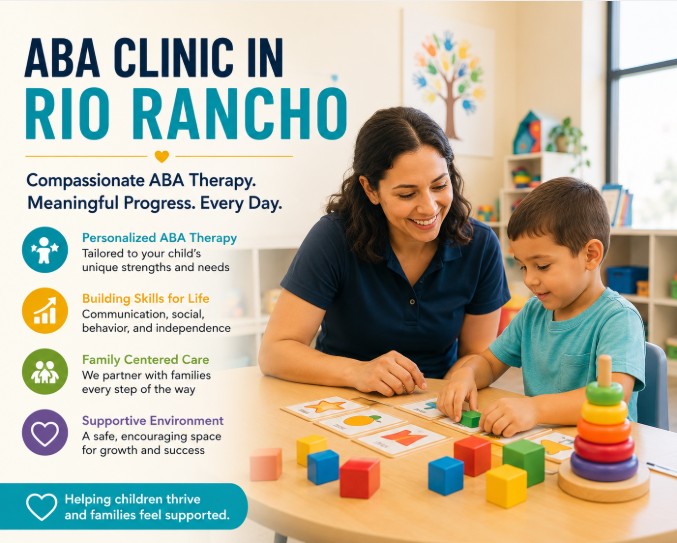
Is a center-based ABA clinic actually the right choice for your child, or just the most familiar option? Most families answer this question too quickly.
Why Most Families Get This Wrong
Many parents assume a clinic setting is simply the default, standard choice. That assumption skips a more useful question entirely.
The real question is not which setting sounds more official. It is which setting matches a specific child's current goals.
Some families choose based on what a friend or relative used. That approach ignores how differently two children can respond to the same environment.
What the Data Actually Shows
About 1 in 31 children aged 8 has been identified with autism spectrum disorder, according to the CDC. That prevalence has increased pressure on clinics across fast-growing cities, including Albuquerque.
Research consistently favors early, intensive intervention regardless of setting. A peer-reviewed meta-analysis found strong gains in adaptive behavior and language from starting sooner.
What the research does not show is a universal winner between clinic and home settings. Outcomes depend heavily on the individual child and the quality of supervision.
A Better Framework for Deciding
Instead of asking which setting is better, ask what specific goals matter most right now. Social interaction goals often favor a clinic environment.
Daily living skills, like getting dressed or managing mealtime, often transfer better when practiced at home. The goal should drive the setting, not the other way around.
A clinic also offers built-in peer exposure that is hard to recreate elsewhere. That matters more as a child approaches school age.
Some families split the difference deliberately. A child might attend a clinic twice a week and receive home sessions the rest of the time.
That kind of blended plan is common and often recommended by supervising clinicians. It is not a compromise so much as a tailored solution.
What a Clinic Environment Typically Offers
-
Structured rooms designed specifically to limit outside distractions.
-
Regular exposure to other children working on similar goals.
-
On-site access to a supervising clinician throughout the day.
-
Consistent scheduling that does not depend on staff travel time.
What a Home Setting Typically Offers
A home setting builds skills in the exact environment where they need to hold up. That includes routines like mealtime, dressing, and sibling interaction.
There is no travel time, which matters for families juggling work and other children. Sessions can also flex around a household's actual schedule.
Some children who struggle with new environments settle in faster at home. Fewer transitions can mean less resistance at the start of a session.
Cost and Insurance Questions Worth Asking
Coverage details can differ meaningfully between clinic-based and home-based therapy. Confirming this early prevents billing confusion once services begin.
Ask whether a clinic bills insurance directly or requires reimbursement afterward. That single detail affects a family's monthly cash flow significantly.
Also ask what happens if a child's needs change mid-year. Some plans adjust smoothly between settings, while others require a full new intake process.
What Albuquerque Families Often Prioritize
Commute time comes up often in a spread-out metro area. A clinic across town can quietly become a barrier to consistent attendance.
Bilingual support also matters for many families in the region. Ask directly whether technicians and clinicians can work in a family's preferred language.
Scheduling flexibility around school hours matters too, especially for families with more than one child in services.
Steps to Make the Decision
Start with a written list of the three goals that matter most this year. Ask any clinic directly how their setting supports each one.
Ask about the ratio of technicians to children in group settings. A high ratio can reduce the individual attention a child actually receives.
Request a trial visit if one is offered. Watching a session firsthand reveals more than any brochure or phone call.
Compare that experience against what a home-based alternative would look like for the same goals. The contrast often clarifies the decision quickly.
Write down the answers to these questions after each visit. Comparing notes side by side makes the decision far less abstract.
One Last Question
Before choosing a clinic because it feels like the obvious option, ask one more question. Does this setting actually match what your child needs to work on right now?
That single question, asked honestly, usually points families toward the right answer faster than any comparison chart.


 English
 Arabic
 French
 Portuguese
 Deutsch
 Turkish
 Dutch
Dutch
 Italiano
 Russian
 Romaian
 Portuguese (Brazil)
 Greek
Greek