


The Importance of Weld Controllers in Automated Welding Processes
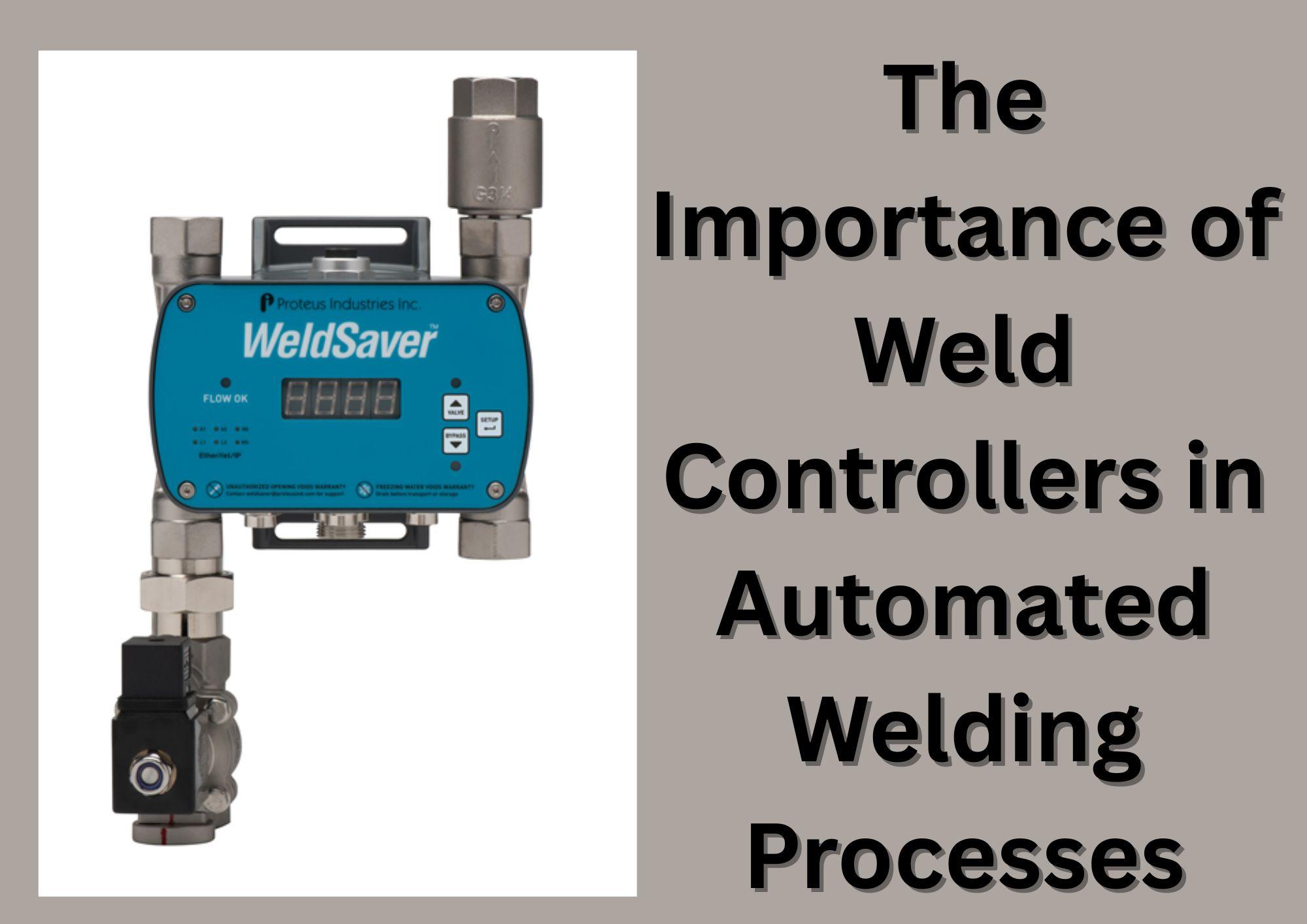
Automated welding has become a core component of modern manufacturing due to its ability to deliver speed, repeatability, and consistent quality. Industries such as automotive, aerospace, electronics, and heavy equipment manufacturing rely heavily on automation to meet tight production schedules while maintaining strict quality standards. Unlike manual welding, automated systems reduce human error and allow for precise control over welding variables.
In these environments, maintaining stable weld quality is critical, which is why the role of a weld controller becomes central to the process. By coordinating welding parameters within automated systems, manufacturers can ensure that each weld meets predefined specifications, even during high-volume production runs.
1. What Is a Weld Controller and How It Functions
A weld controller is an electronic device designed to regulate and manage welding operations in automated or semi-automated systems. It controls essential factors such as current, voltage, timing, and pressure, ensuring that the welding cycle is executed consistently every time. This level of control is essential for achieving uniform welds across thousands of repetitions.
Functionally, weld controllers act as the command center of the welding system. They receive sensor input, process the data, and make real-time adjustments to maintain optimal welding conditions. This intelligent regulation helps minimize defects and ensures repeatable performance across different materials and production environments.
2. Role of Weld Controllers in Welding Accuracy and Consistency
Accuracy and consistency are two of the most important factors in automated welding, and weld controllers directly support both. By precisely controlling energy delivery and weld timing, they help ensure that each joint receives the correct amount of heat and pressure. This prevents issues such as weak welds, burn-through, or inconsistent bonding.
Consistency is especially critical in large-scale manufacturing, where even small variations can lead to product failures or costly rework. Weld controllers eliminate guesswork by standardizing the welding process, resulting in uniform weld strength and appearance across every component produced.
3. Monitoring and Control of Critical Welding Parameters
One of the primary advantages of weld controllers is their ability to continuously monitor critical welding parameters. These include current flow, voltage levels, weld duration, and cooling cycles. Real-time monitoring allows the system to detect deviations immediately and make corrections before defects occur.
Advanced controllers also provide data logging and diagnostics, enabling manufacturers to analyze performance trends and identify potential issues early. This proactive approach improves process stability, reduces downtime, and supports ongoing quality improvement initiatives.
4. Benefits of Weld Controllers in Industrial Automation
The integration of weld controllers into automated systems offers numerous operational benefits. One of the most significant advantages is improved production efficiency. With precise control over welding cycles, manufacturers can achieve faster throughput without compromising quality.
Additionally, weld controllers help reduce material waste and lower maintenance costs. By preventing overheating and inconsistent welds, they extend the lifespan of electrodes and welding equipment. This results in fewer breakdowns, reduced downtime, and improved overall cost efficiency.
5. Common Applications of Weld Controllers in Manufacturing
Weld controllers are widely used across various manufacturing sectors where precision and reliability are essential. In the automotive industry, they play a vital role in resistance welding for body panels, frames, and structural components. Their ability to maintain consistent weld quality supports vehicle safety and durability standards.
Other industries, such as appliance manufacturing, electronics, and metal fabrication, also depend on weld controllers for automated assembly lines. In these settings, consistent welding performance is crucial for maintaining product quality and meeting regulatory requirements.
6. Our Weld Controller Solutions and Services
Our weld controller solutions are designed to support manufacturers seeking greater control, efficiency, and reliability in their welding operations. We offer systems that seamlessly integrate with automated welding equipment, providing precise parameter control and real-time monitoring.
In addition to equipment solutions, our services include system configuration, performance optimization, and technical support. By tailoring weld controller setups to specific production needs, we help organizations improve weld quality, reduce operational risks, and enhance long-term system performance.
7. Conclusion: Why Weld Controllers Are Essential for Automation
Automated welding systems demand precision, consistency, and reliability to meet modern manufacturing standards. Weld controllers play a critical role in achieving these goals by regulating welding parameters, monitoring performance, and ensuring repeatable results.
As automation continues to advance, the importance of weld controllers will only increase. By investing in robust control systems and professional support services, manufacturers can enhance productivity, maintain quality standards, and ensure the long-term success of their automated welding processes.


 Arabic
 French
 Spanish
 Portuguese
 Deutsch
 Turkish
 Dutch
Dutch
 Italiano
 Russian
 Romaian
 Portuguese (Brazil)
 Greek
Greek