


Korean Age System Explained: Why Koreans Are 1-2 Years Older (And How to Calculate Your Korean Age)
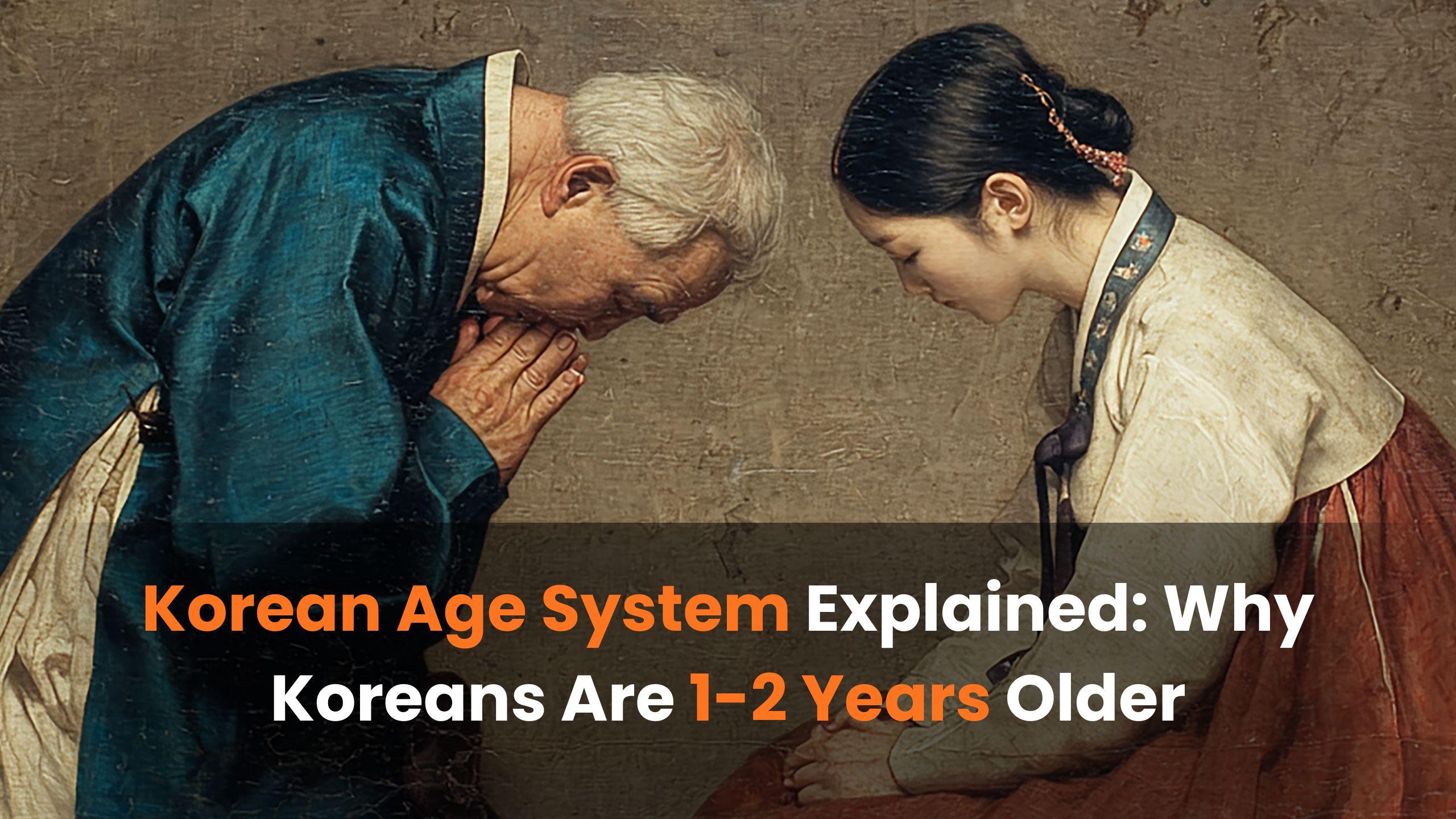
When Lisa first moved to Seoul for her teaching job, she was confused during her welcome party. Her colleague asked her age, and she said "25." Everyone looked surprised. "So you're 27 in Korea!" they said, laughing at her confused face.
Lisa's experience is common for foreigners visiting or moving to South Korea. The Korean age system can be genuinely confusing, even for people who consider themselves good at math. You might arrive in Korea at age 25 and suddenly discover you're 26 or even 27 years old according to Korean counting.
If you've ever wondered why K-pop idols seem to have different ages depending on where you read about them, or why Korean dramas mention ages that don't quite match up, you're not alone. Let's break down this unique system step by step.
What Exactly is Korean Age?
Korean age, called "만 나이" (man nai) traditionally, works completely differently from the international age system most countries use.
Here's the basic rule: In Korea, everyone is born at age 1, not age 0. Then, everyone gets one year older on January 1st, regardless of when their actual birthday is.
This means you could be born on December 31st and turn 2 years old the very next day on January 1st, even though you're only one day old in international age.
Sounds strange? There's actually fascinating cultural and historical reasoning behind it.
Why Does Korea Count Age This Way?
The Korean age system comes from traditional East Asian age reckoning that dates back thousands of years. In this system, the time spent in the womb counts as the first year of life. You're considered 1 year old at birth because you've already been alive for approximately 9 months.
Additionally, the collective New Year aging reflects traditional values about community over individuality. Everyone in society ages together on the same day, which reinforces social bonds and shared experiences.
This system was common throughout East Asia historically. China and Japan also used similar counting methods, though they've mostly switched to international age in modern times. Korea maintained this tradition longer than other countries.
The Three Different Age Systems in Korea
Here's where it gets even more complex. Until recently, Korea actually used three different age counting systems simultaneously:
Korean Age (세는나이): The traditional system where you're 1 at birth and gain a year every January 1st.
Counting Age (연 나이): You're 0 at birth but still gain a year every January 1st instead of on your birthday.
International Age (만 나이): The system used worldwide, where you're 0 at birth and gain a year on your actual birthday.
Different situations called for different age systems. International age was used for legal documents and official records. Korean age was used in social situations and daily conversation. Counting age sometimes appeared in traditional ceremonies.
Imagine needing to remember three different ages for yourself! This confusion led to real problems in Korean society.
How to Calculate Your Korean Age
Let's make this simple with clear steps.
Step 1: Start with your international age (the age you normally use)
Step 2: Add 1 year (because Koreans are born at age 1, not 0)
Step 3: Check the calendar
- If your birthday hasn't happened yet this year, add another year
- If your birthday already passed this year, you're done
Example 1: You're 28 years old, born in March, and it's currently July.
- Start with 28
- Add 1 = 29
- Your birthday (March) already passed, so your Korean age is 29
Example 2: You're 28 years old, born in November, and it's currently July.
- Start with 28
- Add 1 = 29
- Your birthday (November) hasn't happened yet, so add another 1 = 30
- Your Korean age is 30
Example 3: You're born on December 31st, 2023.
- On December 31st, 2023: You're Korean age 1
- On January 1st, 2024: You're Korean age 2 (even though you're only 1 day old internationally)
The easiest way to figure this out instantly? Use a Korean Age Calculator that does all the math for you automatically. Just enter your birthdate and get your exact Korean age in seconds.
Real-Life Situations Where Korean Age Matters
Understanding Korean age isn't just about satisfying curiosity. It has practical applications if you interact with Korean culture.
Meeting New People: When Koreans meet, one of the first questions is often "How old are you?" This determines the level of formal or informal language to use. In Korean society, age heavily influences social hierarchy and respect levels. Using Korean age in these situations shows cultural awareness.
K-Pop and K-Dramas: Fan communities often discuss idol ages, debut ages, and age gaps between members. You'll see different ages reported depending on whether sources use Korean or international age. This causes endless confusion in international fan communities.
Drinking and Legal Ages: Korea's legal drinking age is 19 in Korean age, which equals 18 or 19 in international age depending on your birthday. Understanding the conversion prevents misunderstandings about legal requirements.
School Years: Korean schools group students by birth year, not by age cutoffs like September or January birthdays in Western countries. All students born in the same year are in the same grade, regardless of their actual birthday.
Social Relationships: Korean language has different words and grammar based on whether you're speaking to someone older or younger. Getting ages right ensures you use appropriate respect levels.
The Big Change: Korea's New Age Law
In December 2022, South Korea's government made a historic decision. They passed a law to standardize age counting across the country, effective June 2023.
Why did they make this change?
Legal Confusion: Having multiple age systems caused problems in legal documents, medical records, and administrative processes. A person might be 25, 26, or 27 depending on which system was used.
International Business: As Korea globalized, the unique age system created confusion in international contracts and communications.
Administrative Costs: Maintaining multiple systems required extra work in government offices, schools, and hospitals.
Public Support: Surveys showed about 70% of Koreans supported switching to international age to reduce confusion.
The new law requires using international age for all legal and administrative purposes. However, Korean age still appears in casual conversation and social situations, especially among older generations who grew up with the traditional system.
This means you still need to understand both systems when interacting with Korean culture.
Common Questions and Confusions
"Am I really older in Korea?" Not physically. Your biological age doesn't change based on geography. But socially, you're counted as older in Korean age calculations.
"Which age should I use when someone asks?" For official documents after June 2023, use international age. In social situations with older Koreans, they might expect Korean age. When in doubt, ask which system they mean.
"Why do K-pop idols have different ages?" International news uses international age, while Korean sources might use Korean age. This creates discrepancies of 1-2 years.
Age System Comparison
Let's put this in perspective. If you were born on March 15, 2000:
International Age: On March 14, 2024, you're 23. On March 15, 2024, you turn 24.
Korean Age: On January 1, 2024, you're 25 (regardless of your birthday).
The difference becomes especially noticeable for people born late in the year. Someone born in December experiences the maximum possible difference.
Want to see exactly how your age translates? An age calculator can show you precise calculations including years, months, and even days helping you understand the exact differences between age counting systems.
Practical Tips for Visitors and Fans
Understanding Korean age helps in real situations. If you're visiting Korea, use international age for official documents like visa applications and medical forms. But when meeting new Korean friends, they might ask your age using the Korean system.
For K-pop fans, check whether sources use Korean or international age when reporting idol ages. This explains why different websites show different ages for the same person.
When learning Korean language, remember that age determines which speech level you use. Knowing your Korean age relative to others helps you speak appropriately and show proper respect.
Final Thoughts
The Korean age system might seem confusing at first, but it's actually quite logical once you understand the basic rules. Everyone starts at 1, and everyone ages on January 1st.
Whether you're planning to visit Korea, you're a K-pop fan trying to figure out your bias's real age, or you're just curious about different cultures, understanding this system enriches your knowledge of Korean society.
The next time someone asks your age in Korea, you'll be ready with the right answer. And you'll understand the fascinating cultural history behind those extra years.


 English
 French
 Spanish
 Portuguese
 Deutsch
 Turkish
 Dutch
Dutch
 Italiano
 Russian
 Romaian
 Portuguese (Brazil)
 Greek
Greek